Trust takes repetition
Ask people why their dog feels like a best friend and they often describe something quiet: a dog who settles beside them, checks in on walks, greets them at the door. That closeness is real, and it is earned. It grows from many small, repeated experiences in which a dog learns that its people are safe, fair and easy to read.
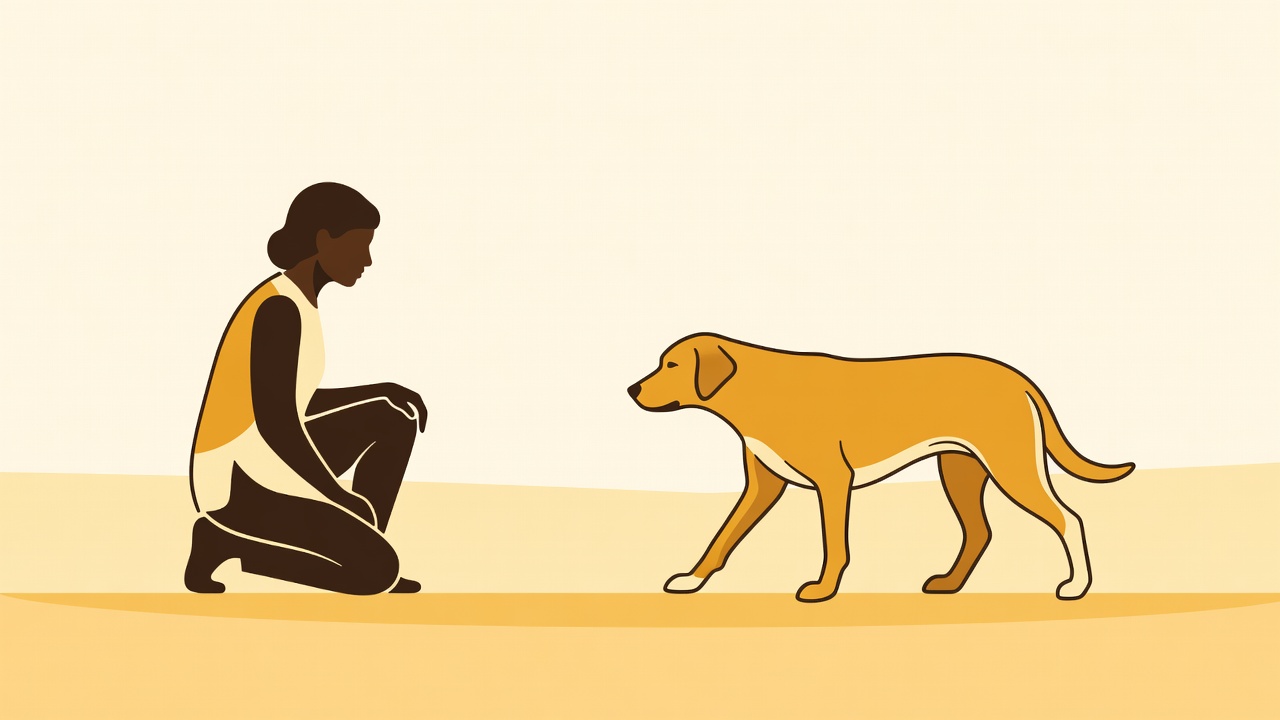
Why the bond feels rewarding
Dogs are social animals that have lived alongside people for thousands of years, and many are remarkably attentive to human faces, voices and gestures. A dog will often follow where you point, notice when you pick up your keys and respond to your mood. That attentiveness is a large part of why the relationship feels mutual rather than one-sided.
For people, the reward often lies in the ordinary parts: a reason to get outside, a routine that steadies the day, and the company of an animal that responds to them. None of this requires a perfectly behaved dog. It does require a reasonably consistent person, because a dog's attention only becomes rewarding for both sides when the dog can make sense of what it sees.
Predictability is a kind of kindness
Dogs cope best when their world makes sense. If meals, walks, rest and play follow a recognisable pattern, a dog spends less energy guessing and more energy settling. That doesn't mean a rigid clock. It means the same cues lead to the same outcomes: the lead coming out means a walk, a particular word means "come back", a closed door means quiet time.
Consistency between household members matters just as much. If one person allows the dog on the sofa and another scolds it for climbing up, the dog cannot win. A short conversation about a few shared rules, and the words used for them, removes a great deal of confusion.
Rewards teach more than corrections
Dogs repeat what works for them. When a behaviour leads to something the dog values, it becomes more likely. Food is the simplest reward, but play, praise, a sniff of an interesting spot or the chance to greet a friend can all count, depending on the dog.
Reward-based training is widely recommended because it shows the dog what to do and keeps the relationship pleasant. Harsh corrections may stop a behaviour in the moment, but they can also teach a dog that its person is unpredictable, which works against trust. A practical habit is to catch good moments, such as lying calmly, coming when called or choosing to look at you, and reward them as they happen rather than waiting for something to go wrong.
A simple consent check for handling
Being touched is not automatically pleasant for every dog, every time. A consent check lets the dog take part in the decision.
- Invite rather than reach. Crouch side-on or sit nearby and let the dog come to you.
- Stroke briefly somewhere most dogs find comfortable, such as the chest or the side of the neck.
- Stop and take your hand away for a moment.
- Watch the answer. Leaning in, nudging your hand or staying close usually means "more, please".
- Respect a "no". Moving away, turning the head, licking the lips or going still all mean pause and give space.
The same principle helps with grooming, nail care and vet handling: short, rewarded sessions with breaks build tolerance far better than holding a dog still until it is over. For anything your dog finds genuinely distressing, ask your vet or a qualified behaviour professional for a gradual plan.
When trust wobbles
Every relationship has setbacks. A frightening event, a rough handling moment or a move to a new home can make a dog more wary for a while. Repair usually looks like stepping back to what felt easy: more distance, simpler routines, more rewards for small calm choices and fewer demands.
A sudden change in behaviour, such as new grumpiness, hiding or snapping when touched, can also have a physical cause like pain. Before treating it as a training issue, it is sensible to have a vet check your dog.
Trust is not the same as obedience
A dog that does as it is told is not necessarily a dog that feels safe. Trust shows in quieter ways: a dog that settles in new places when you are nearby, that looks to you when unsure, that recovers quickly after a startle. Cues such as "sit" and "wait" are useful for safety and everyday manners, and they work best on top of a relationship where the dog already expects good things from you. Teach them, by all means, but measure progress by how relaxed your dog is, not only by how quickly it responds.